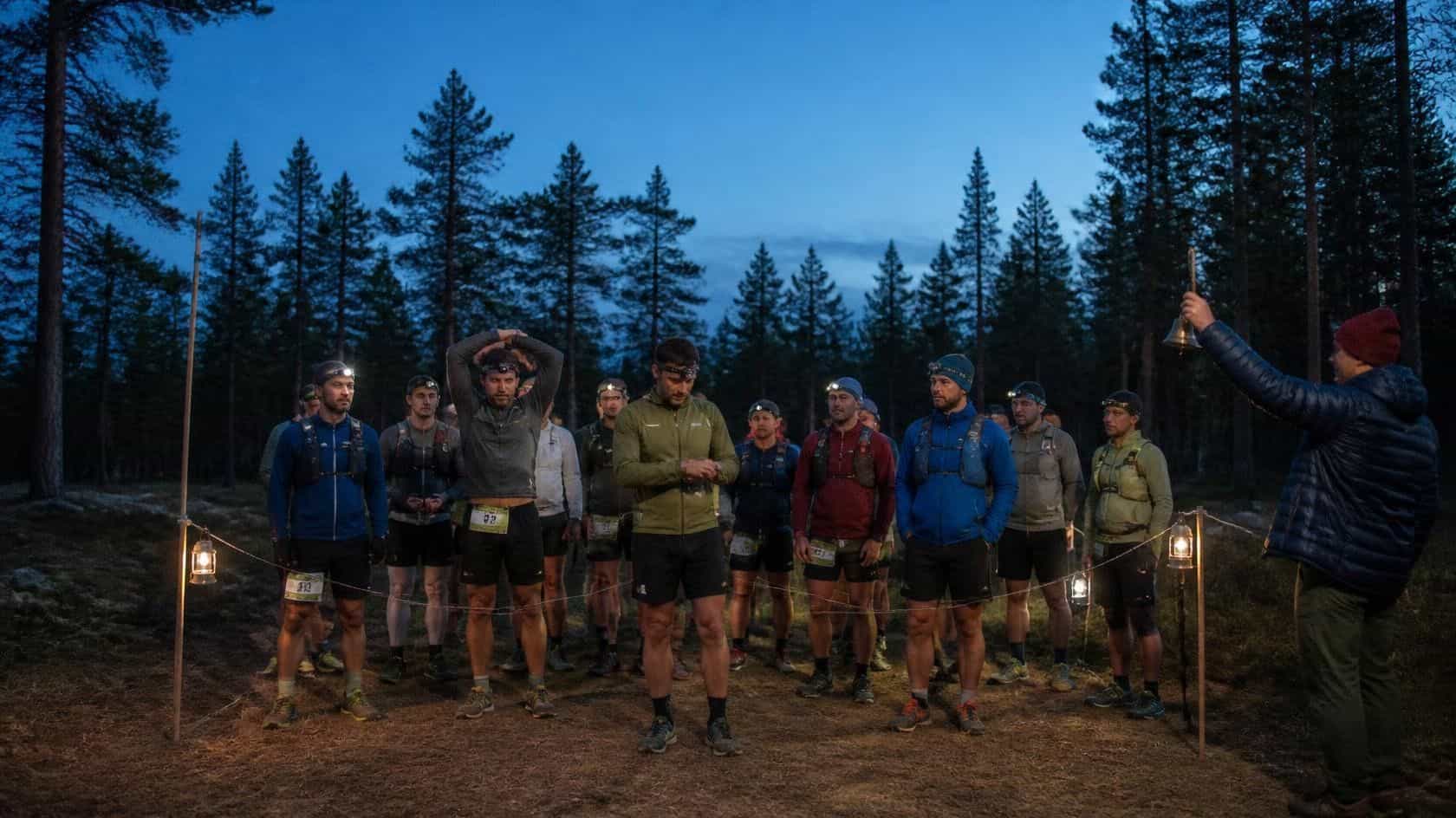
One loop, every hour
Backyard Ultras
A last-person-standing format built around one 6.7056 km loop every hour, on the hour, until one runner completes a yard that nobody else finishes.
Cover image: AI-generated illustration, not a photo of a specific race.
How the Format Works
In a backyard ultra, runners must complete a 6.7056 km (4.1667 mile) loop within each hour and return for the next start. Missing the bell or failing to finish a loop in time ends the attempt.
The winner is the runner who completes one more yard than everyone else. If two people start yard 30 and only one finishes, that runner wins with 30; a solo yard 31 is not required. If the last remaining runners all fail the same yard, there is no winner.
The fixed hourly rhythm makes routine visible. Pace has to leave usable recovery time, while food, foot checks, clothing, bottles, crew communication, and optional rest must fit between bells.
Checked figures
The numbers the format is built on
A standard yard is fixed. The winner completes one more yard than every other runner, and that yard can start with more than one person. The record table below was checked against the organizers' list on 14 September 2026.
| Measure | Figure |
|---|---|
| Standard yard | 6.7056 km / 4.1667 miles, started on the hour |
| 24 completed yards | 100 miles. The race continues until the winning condition is met. |
| How a winner is decided | One more completed yard than every other runner. The deciding yard can start with more than one person. If nobody finishes it, there is no winner. |
| Overall record | 119 yards (797.97 km / 495.8 miles), Phil Gore, Dead Cow Gully, June 2025 |
| Women's record | 95 yards (637.03 km / 395.8 miles), Sarah Perry, Big's Backyard Ultra, October 2025 |
Later claims have been set aside by the organizers. Confirm the current table before quoting a record, and confirm each race's corral and assistance rules before entering.
Sources: Big's Backyard Ultra — official rules; Big's Backyard Ultra — record table; Backyard ultras explained, with the 14 September 2026 record check.
Curated preparation path
Learn, Train, and Plan
1. Understand the Format
Learn the rules, scoring, failure conditions, and how backyard racing differs from a timed event.
Backyard Ultras Explained
Rules, records, course changes, common misconceptions, and safety.
AnswerBackyard Ultra vs 24-Hour Race
Compare hourly starts with a continuous fixed-time clock.
Answer6-Day Race vs Backyard Ultra
Compare open-ended elimination with a fixed six-day duration.
CalendarWorld Team Championship 2026
Satellite format, national-team scoring, how to follow it live, and every past championship result.
2. Build the Training Plan
Practice comfortable loops and transitions without trying to rehearse extreme sleep loss.
Train for Your First Backyard Ultra
An adaptable framework for loop rhythm, easy durability, transitions, and recovery.
ToolBackyard Pace and Rest Calculator
Test loop pace against the recovery minutes it leaves before the next bell.
ToolMultiday Pace Calculator
Compare loop pace with the recovery minutes left before each bell.
3. Create the Loop Routine
Make every transition simple enough to repeat when appetite, weather, and alertness change.
Backyard Ultra Race Strategy
Plan pace, transition priorities, crew communication, rest, and stop criteria.
GuideBackyard Ultra Nutrition
Build flexible between-loop food and fluid options across changing appetite.
GuideCrew Instructions Template
Printable crew sheet with a between-yard countdown, runner handoff calls, a stop log, and the red-flag card.
4. Prepare for Darkness
Use reliable lighting, simple packing, and clear alertness decisions once the event reaches night.
Headlamp and Battery Strategy
Plan tested primary and backup lighting for repeated night loops.
GuideSleep Strategy for Multiday Races
Understand rest options and why caffeine cannot replace safe alertness.
AnswerCan You Sleep During an Ultramarathon?
Understand what the few minutes between bells can and cannot restore overnight.
Curated race directory
Active and Upcoming Backyard Ultra Events
6 matching events as of Oct 19, 2026; event source reviews dated August 19, 2026 – October 19, 2026. 6 past editions remain in the directory archive.
Dutch Backyard Ultra
Zeewolde, Netherlands
A public backyard ultra at Scoutinglandgoed Zeewolde, held alongside the Netherlands World Team Championship satellite. Runners repeat the same forest loop by day and night.
View verified race details →World Backyard Ultra Team Championship
Bell Buckle, Tennessee, USA (and worldwide satellite sites)
The premier backyard ultra team event. National teams of up to 15 runners compete simultaneously at satellite sites worldwide. Each runner completes 4.167-mile loops every hour. The country with the most total loops wins.
View verified race details →Smurf's Backyard Ultra
Smithfield, Cairns, Australia
A Cairns backyard ultra on the trails of Smithfield Mountain Bike Park, with hourly starts and a separate six-lap introductory event.
View verified race details →Cobb & Co Backyard Ultra
Tandur, Queensland, Australia
A Queensland backyard ultra at Cobb & Co Nine Mile Camping Grounds, with a campsite base for runners and crews between hourly loops.
View verified race details →Backyard Ultra Villa Carlos Paz
Villa Carlos Paz, Córdoba, Argentina
An inaugural night-start backyard ultra on Villa Carlos Paz's lakeside costanera, repeating a flat 6.706 km loop every hour.
View verified race details →Capital Backyard Ultra
Lorton, Virginia, USA
A high-level backyard ultra at Meadowood Special Recreation Management Area, built for deep performances in a small, highly supported field.
View verified race details →Dates, entry status, routes, and rules can change. Use each event page's official organizer links before registration or travel. Format preparation paths were reviewed October 2, 2026.
Backyard Ultra FAQs
Can you walk in a backyard ultra?
Yes, and most runners should. A 55-minute yard averages 7.3 km/h, so you can walk about a quarter of each yard at 6 km/h, for example every hill, and run the rest at about 7:40 per kilometre. Walk the same sections every yard from the first one.
How many yards do backyard ultra runners complete?
Our recommendation for a first backyard ultra is 12 yards (80.4 km), with 24 yards (160.9 km, exactly 100 miles) as the stretch. Deep fields go much further: at the 2025 Big's Backyard world championship, the median of the 72 starters was 62.5 yards. The world record is 119 yards (Phil Gore, 2025) and the women's record 95 (Sarah Perry, 2025).
Compare Related Formats
24-Hour Races
A fixed-time race where the clock runs for one full day and every completed lap or measured distance counts.
6-Day Races
A 144-hour fixed-time event where sustainable routines and recovery choices matter across nearly a full week.
48-Hour Races
A two-day fixed-time race where sleep, recovery choices, and the second night become central parts of the plan.