Event Overview
| Date | Apr 4-10, 2027 |
|---|---|
| Location | San Pedro de Atacama, Chile |
| Format | Stage Race |
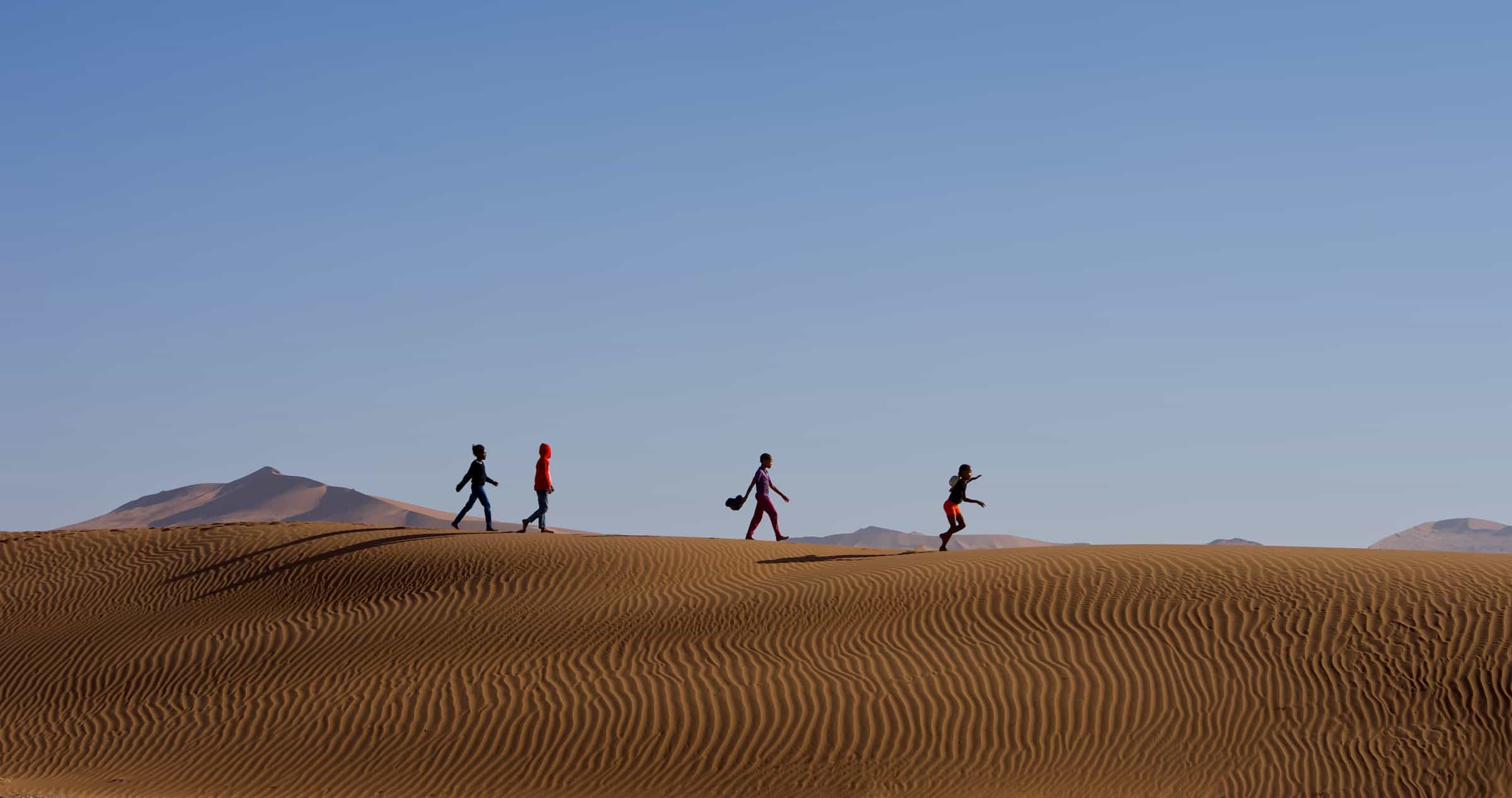
| Terrain | Desert |
| Region | South America |
| Distance / duration | 250 km over 6 stages |
| Course model | Point-to-point |
| Elevation gain | 2,813 m (9,230 ft) |
| Elevation loss | 3,646 m (11,994 ft) |
| Start | 8:00 AM Sunday |
| Field size | RacingThePlanet expects up to 200 competitors from more than 40 countries in 2027. The 2025 field came from 44 countries; the official results list 144 competitors and 127 finishers (93 men and 34 women), with overall times from 27:05:39 to 72:00:59. In 2023, 82 of the 106 competitors in the results finished, and in 2022, 107 of 117. |
| Highlights | Atacama Desert, Six Self-Supported Stages |
Atacama Crossing stages
The six stages of the 2027 race, with dates and start times from the official itinerary and distances, climbs and highlights from RacingThePlanet’s course page.
| Stage | Date (2027) | Name and highlights | Distance | Climb / descent |
|---|---|---|---|---|
| Stage 1 | Sun, Apr 4, 8:00 AM | Navigation by Rock: starts at about 3,200 m in Rainbow Valley and follows the old Inca road | 35.3 km (22.1 mi) | +427 m / −980 m |
| Stage 2 | Mon, Apr 5, 8:00 AM | Through the Slot Canyons: river wading in the canyons, sand dunes and the Valley of Death | 37.5 km (23.4 mi) | +657 m / −911 m |
| Stage 3 | Tue, Apr 6, 8:00 AM | The Atacamenos Trail: the Lonely Tree and restricted ALMA Project land | 39.8 km (24.9 mi) | +287 m / −348 m |
| Stage 4 | Wed, Apr 7, 8:00 AM | The Infamous Salt Flats: a hard crust that can hide soft mud | 44.4 km (27.8 mi) | +492 m / −609 m |
| Stage 5 | Thu–Fri, Apr 8–9, 8:00 AM start | The Long March: lake shores, the Cordillera de la Sal, dunes and the Valley of the Moon, with an overnight checkpoint; Friday is a rest day for finishers | 81.0 km (50.3 mi) | +855 m / −768 m |
| Stage 6 | Sat, Apr 10, 10:00 AM | The Final Footsteps into San Pedro: finish around noon in the town square | 12.0 km (7.5 mi) | +95 m / −30 m |
The six stages total 250 km (156 mi), +2,813 m and −3,646 m. RacingThePlanet calls its distances and elevations approximate and subject to change, and says the Long March usually measures 70 to 90 km. Daily cutoffs are announced at each morning briefing.
Sources: RacingThePlanet: Atacama Crossing course information; Official 2027 Atacama Crossing itinerary.
Recent Atacama Crossing winners
Overall men’s and women’s winners and finisher counts for the five most recent editions, from RacingThePlanet’s official results.
| Year | Men | Women | Finishers |
|---|---|---|---|
| 2025 | Anton Zyrianov (Russia), 27:05:39 | Elise Lagerstrom (USA), 33:49:55 | 127 of 144 |
| 2023 | Scotty Hawker (New Zealand), 25:43:35 | Tanja Volm (Germany), 37:27:13 | 82 of 106 |
| 2022 | Rob Forbes (UK), 21:20:46 (course record) | Diana Melo Reyes (Colombia), 29:52:56 | 107 of 117 |
| 2019 | Jovica Spajic (Serbia), 29:22:00 | Deborah Barber (Australia), 36:40:04 | 70 of 81 |
| 2018 | Wong Ho Chung (Hong Kong), 24:20:56 | Lara Reynolds (Denmark), 39:29:07 | 93 of 106 |
Finishers are counted against every competitor in the official results, including withdrawals. The race did not run in 2020, 2021 or 2024. The women’s record of 29:49:53 belongs to Anne-Marie Flammersfeld (Germany) from 2012.
Sources: RacingThePlanet: Atacama Crossing past results; RacingThePlanet: Atacama Crossing quick facts.
Course & Terrain
Six marked desert stages around San Pedro de Atacama, including a long stage through the Valley of the Moon.
Key course features to know before comparing this race:
- Stage 1 start at about 3,200 m in Rainbow Valley (Valle Arcoiris), on the old Inca road
- Slot canyons on Stage 2, wading through a small river
- Salt flats on Stage 4
- Valley of the Moon on the 81 km Long March
- Finish in the town square of San Pedro de Atacama
The course mixes sand dunes, gravel, loose rock, hard-packed earth, waist-high grass and salt flats. Stage 2 spends about 5 km wading in and out of a small river through slot canyons before a sand-dune descent, and the Stage 4 salt flats can hide soft, muddy ground under a hard crust. Pink flags mark the route, with reflective tape at night, so there is no route-finding, although a compass is mandatory. Altitude is the hidden factor: the whole course is above 2,300 m, Stage 1 starts at about 3,200 m in Rainbow Valley, and most of the route stays around 2,500 m.
RacingThePlanet’s race-week guidance for April 4–10 gives daytime highs of 22–28°C (72–82°F) and nighttime lows of 2–6°C (36–43°F), more than 12 hours of sunshine and less than 1 mm of rain a year, with occasional gusts in open terrain. Its location guide warns that nights can drop to −1°C (30°F) and days can top 35°C (95°F). Sunrise is around 7:30 AM and sunset around 7:30 PM, so slower runners spend part of the Long March in the cold desert night.
Entry & Logistics
| Registration and fees | Check the official event website for current availability, deadlines, prices, taxes, and refund terms. |
|---|---|
| Qualification | No qualifying race is required. Entrants send a stamped doctor’s certificate and a medical form two months before the race. On October 25, 2026, the 2027 entry fee was US$4,200, rising to US$4,500 after December 5, 2026. A US$1,500 deposit secures a place, and the balance is due 120 days before the start (around December 5, 2026), with a US$300 surcharge for late payment. A fuel surcharge of US$250 or US$500 applies if Brent crude passes US$90 or US$120 a barrel. Cancelling at least 120 days out refunds the fees minus US$600; after that, an entry can be transferred once to another RacingThePlanet race (not Antarctica). Instalment plans are available by email. |
| Support model | Checkpoints come roughly every 10 km (6 miles), up to 30 across the week, each with staff, a medical doctor, water and shelter. Water is rationed for drinking only, and runners may stay at a checkpoint for no more than 15 minutes unless medics approve. Camps have shared tents for up to 10 people, a campfire, hot water from about 5:00 to 7:30 AM and 2:00 to 8:00 PM, and a tea-and-coffee tent. On the Long March an overnight checkpoint about halfway also has hot water. Medical staff can stop anyone from starting or continuing, and a runner who receives IV fluids is disqualified. |
| Crew / pacers | No crews or pacers. Outside assistance is banned: taking food from outsiders costs a 2-hour penalty per incident, accepting outside transport means disqualification, and nobody, not even a teammate, may carry a runner’s gear. Family and friends follow along through the daily updates and GPS tracking on the race website. |
| Drop bags | None. Everything for the week goes into the backpack before Stage 1. RacingThePlanet stores one bag for each runner during the race, and the only extra item it moves between camps is a personal tent for runners who bring one. |
| Logistics note | Fly to Santiago (SCL), connect to Calama (CJC), then take a bus or taxi for about an hour to San Pedro de Atacama, roughly 100 km southeast of Calama. Competitors arrive on Friday, April 2, 2027, at the race hotel, Hotel Diego de Almagro, and check in on Saturday, April 3, with administrative, medical and kit checks; RacingThePlanet then transfers the field to Camp 1. Stages start at 8:00 AM from Sunday, April 4. The final stage starts at 10:00 AM on Saturday, April 10, and finishes around noon in San Pedro’s town square, with the awards banquet at 7:00 PM. The fee covers the Friday and Saturday hotel nights (double occupancy); flights, airport transfers and insurance are extra. The organizer suggests arriving a few days early to adjust to the altitude. |
Why This Race Matters
RacingThePlanet, the company American Mary Gadams founded in February 2002, added the Atacama Crossing in July 2004 as the second race of its 4 Deserts series, after the Gobi March. The April 4–10, 2027 race is the 19th edition: it ran in 2004, every year from 2006 to 2019, and in 2022, 2023 and 2025. Runners cover 250 km in six stages carrying a week of food and kit, with only water, a tent place, hot water at camp and medical support provided. The whole course sits above 2,300 m, starting at about 3,200 m in Rainbow Valley and finishing in the town square of San Pedro de Atacama. Rob Forbes holds the record at 21:20:46 from 2022, and the race counts toward the 4 Deserts Grand Slam.
Historical benchmark notes in the directory record (verify current records with the linked official sources):
- Men: Rob Forbes (UK), 21:20:46, 2022
- Women: Anne-Marie Flammersfeld (Germany), 29:49:53, 2012
Preparing for a Race Like Atacama Crossing
The stage race guide covers the format as a whole. These guides go deeper:
- Stage race packing list: Mandatory kit, daily carry, camp bags, food and foot care.
- Walking strategy for ultramarathons: When and how to walk by terrain, effort and cutoffs.
- Hydration and sodium for ultramarathons: Fluid, sodium, thirst, sweat rate and hyponatremia risk.
- Blister prevention: Socks, taping, lubrication, shoe fit and hot spots.
Best Fit
- First-time stage racers: the organizer expects only about 30% of the field to have done a previous RacingThePlanet race
- Strong hikers, since cutoffs assume a 4 km/h walking pace and about 20% of the field walks the whole course
- Runners working toward the 4 Deserts Grand Slam
Planning Notes
- Study the mandatory gear list early and rehearse carrying the exact pack weight you expect to use on race day.
- Heat, sun, and dry air require event-specific preparation. Test sun protection and cooling, drink in response to thirst, and remember that sodium cannot make overdrinking safe.
- The directory does not mark this as having simpler logistics. Confirm qualification, terrain, support, registration, medical, and withdrawal requirements before planning around it.
- Altitude from day one: Camp 1 and the Stage 1 start sit at about 3,200 m
- The 81 km Long March, roughly double a normal stage, with an overnight checkpoint for slower runners
- Wet feet in the Stage 2 slot canyons, then hot, dry days and near-freezing nights
- Kit rules: a missing essential item or less than 2,000 calories of food per day means disqualification
Event FAQs
How hard is the Atacama Crossing?
It is a 250 km self-supported week above 2,300 m, but most starters finish. In 2025, 127 of the 144 competitors in the official results finished, and in 2022 the figure was 107 of 117. The hardest parts are the first night at about 3,200 m, a pack that averages 9 kg, and the 81 km Long March. The organizer says about 20% of the field runs the whole course and 20% walks it.
When is the next Atacama Crossing, and how much does it cost?
The 19th edition runs April 4–10, 2027, from San Pedro de Atacama, with arrival on April 2 and check-in on April 3. The race last ran from March 30 to April 5, 2025. Entry costs US$4,200, or US$4,500 after December 5, 2026, and a US$1,500 deposit holds a place. The fee covers seven nights in camp, two hotel nights, water, medical support and the awards banquet, but not flights or insurance.
What are the cutoffs, and can you walk the Atacama Crossing?
Yes. RacingThePlanet announces each day’s cutoffs at the morning briefing and bases them on a walking pace of 4 km/h (2.5 mph), so a 40 km stage gets about 10 hours. The Long March allows extra time for a rest at the overnight checkpoint. The slowest finishers take around 70 hours of racing time in total. Missing a cutoff ends your race and your chance of a finisher’s medal.
What do you have to carry on the Atacama Crossing?
All 35 mandatory items for seven days, including at least 14,000 calories of food (2,000 a day), a sleeping bag and liner rated to 0°C, bottles or bladders for 2.5 L of water, two lights, a red flashing rear light, a compass, a reflective bivvy bag and a blister kit. Packs average about 9 kg without water, and the organizer recommends staying under 10 kg. Kit is checked in San Pedro before the start.
Is there a shorter version of the Atacama Crossing?
Yes. UltraLite (Chile) runs on the same dates and uses the same camps, with separate tents. Participants choose 10 or 20 km a day, up to half of each stage and generally no more than 40 km on the Long March, for up to 125 km in total. Fifty kilometers earns a finisher’s medal, Stage 6 is compulsory, and the minimum age is 18. Camp gear travels between camps in a bag of up to 60 liters.
Related Preparation
- Browse the multiday stage-race calendar
- Open the Stage Race format guide
- Compare all race formats
- Use the timed-race pace calculator
- Plan checkpoint arrivals and cutoff buffers
- Estimate race calories and plan fueling
- Build a crew and drop-bag plan
- Build a race-specific gear checklist
Verification & Sources
Verification scope: the listed edition's date, location, format, and available logistics were checked against the event-specific official sources below during the directory review dated October 25, 2026. Organizers can revise details after review.
- Official 2027 Atacama Crossing itinerary — https://www.racingtheplanet.com/chile/itinerary
- RacingThePlanet: Atacama Crossing at a glance — https://www.racingtheplanet.com/chile/atacama-crossing/at-a-glance
- RacingThePlanet: Atacama Crossing quick facts — https://www.racingtheplanet.com/chile/atacama-crossing/quick-facts
- RacingThePlanet: Atacama Crossing course information — https://www.racingtheplanet.com/chile/atacama-crossing/course
- RacingThePlanet: Atacama Crossing equipment list — https://www.racingtheplanet.com/chile/atacama-crossing/equipment
- RacingThePlanet: Atacama Crossing past results — https://www.racingtheplanet.com/chile/atacama-crossing/past-results
- RacingThePlanet: entry details and fees — https://www.racingtheplanet.com/entry-details
- RacingThePlanet: Chile rules and regulations — https://www.racingtheplanet.com/chile/rules-regulations
- RacingThePlanet: Chile location, weather and culture — https://www.racingtheplanet.com/chile/location-weather-culture
- RacingThePlanet: frequently asked questions — https://www.racingtheplanet.com/frequently-asked-questions
- RacingThePlanet: Atacama Crossing FAQ — https://www.racingtheplanet.com/chile/2025/story/frequently-asked-questions
- RacingThePlanet: Atacama Crossing 2025, what’s not to love — https://www.racingtheplanet.com/chile/2025/story/atacama-crossing-2025-whats-not-to-love
- RacingThePlanet: Atacama Crossing 2025 snapshot of the field — https://www.racingtheplanet.com/chile/2025/story/atacama-crossing-2025-snapshot-of-the-field
- RacingThePlanet: about us — https://www.racingtheplanet.com/about-us
- RacingThePlanet: UltraLite (Chile) at a glance — https://www.racingtheplanet.com/chile/ultralite/at-a-glance
- Multiday Running event directory review scope: October 25, 2026.