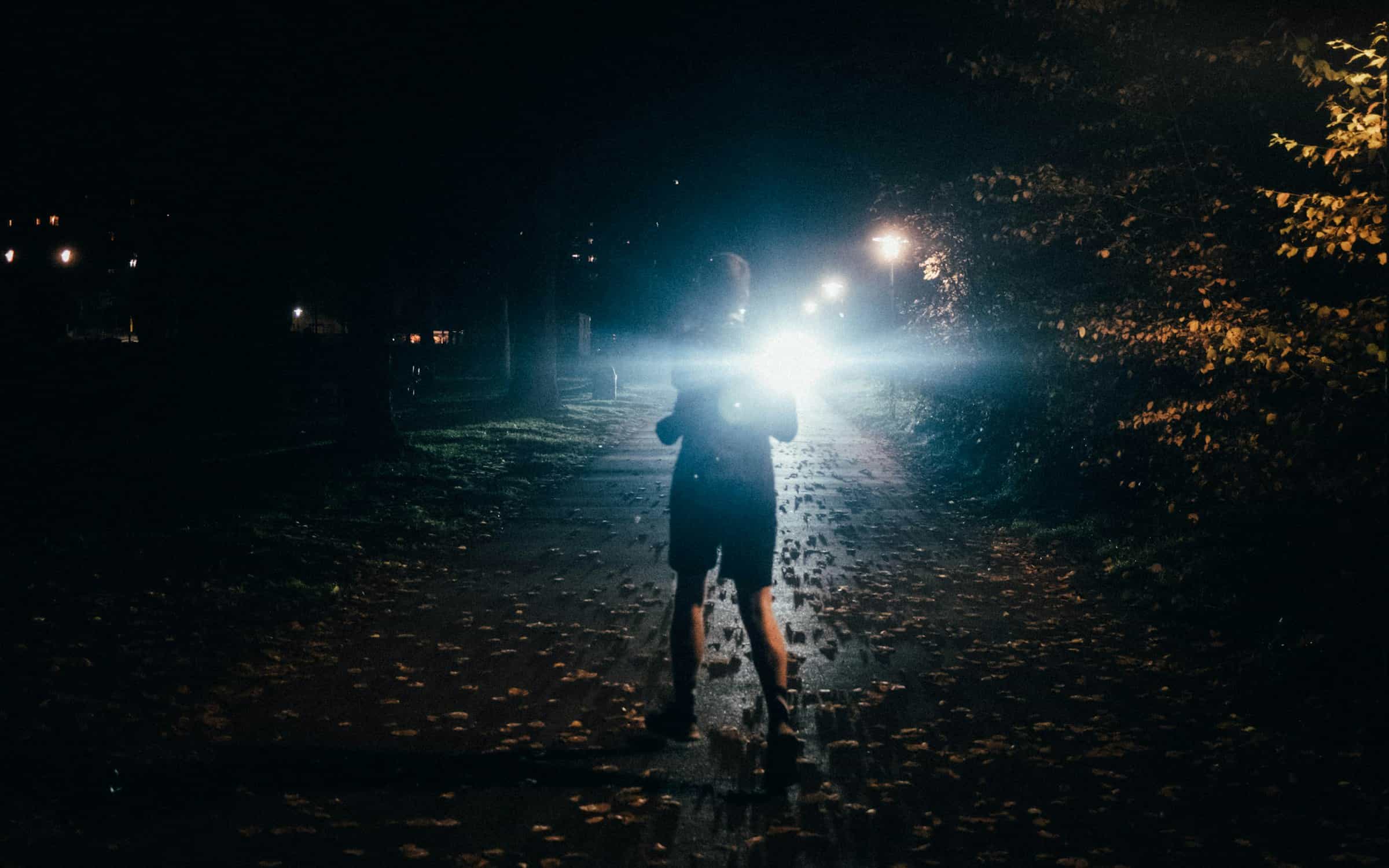
The second night can expose accumulated sleep loss, exertion, pain, temperature stress, and decision fatigue. The goal is not to keep moving at any cost. It is to use a pre-agreed plan that stops forward progress when alertness, coordination, or health becomes unsafe.
Why the Second Night Can Hit Hard
Sleep pressure generally rises with time awake, while circadian timing can intensify sleepiness overnight. Ultra-endurance field studies have reported slower responses, impaired executive function, falls, hallucinations, and other cognitive or motor problems. Those studies do not define a safe number of waking hours or a universal sleep schedule.
In 48-hour races, 200-mile races, and longer events, plan around the course, weather, technical exposure, prior sleep, individual response, and access to crew and race medical care. A runner with a sleep disorder, relevant health condition, or medication that affects sleep or alertness should seek qualified clinical advice before the event.
Set Up Before Dark
Prepare equipment and communication while you are still alert. Your plan should identify safe stopping locations and who has authority to call for a medical check or withdrawal.
- Carry a working primary light and accessible backup.
- Place weather-appropriate layers where they can be reached without delay.
- Confirm crew, aid-station, race-medical, and emergency contact procedures.
- Mark safe sleep locations and any course sections where impairment carries greater consequences.
- Agree that safety warnings override pace, placing, cutoff, and the desire to complete another lap.
Pair the equipment check with the headlamp and battery strategy.
Plan Sleep and Safe Stopping
Our default for a 48-hour race is 1–3 hours of sleep in total, most of it on the second night: one 90-minute sleep in the small hours, plus 20-minute naps (alarm at 25 minutes) as needed. Avoid 30–60 minute naps, which are the most likely to end in deep sleep and a groggy restart. The budgets for other formats, and the evidence behind the nap lengths, are in the sleep strategy guide.
| Observed situation | Immediate response | Reason |
|---|---|---|
| Expected tiredness without neurological or medical warning signs | Use the pre-agreed plan and move to a safe supported location if rest is needed | Do not improvise a nap location or stimulant protocol while judgment is reduced |
| Involuntary sleep, repeated stumbling, falls, or loss of coordination | Stop moving, secure the runner, and contact race medical staff immediately | Continuing creates an immediate fall, navigation, traffic, or exposure risk |
| Confusion, hallucinations, route errors, or unusual behavior | Stop and obtain immediate race-medical assessment | Sleep loss can overlap with hyponatremia, heat or cold illness, hypoglycemia, and other emergencies |
| Chest pain, severe breathing difficulty, or collapse | Activate race emergency procedures without delay | These require urgent assessment, not sleep, food, caffeine, or one more checkpoint |
A Second-Night Timeline
The first night is usually survived on residual alertness. The second is not, so it rewards decisions made in advance and attached to the clock rather than to how you feel. This is our default for a runner who started on a Saturday morning:
- Dusk (roughly 19:00–21:00): do the whole night changeover while it is still light and you can still read a label. Lights on and backup stowed, night layers on or in hand, feet inspected and re-taped, and a warm drink started. Tell your crew what time you expect to want your first rest, so they are not guessing later.
- Midnight: take the first deliberate pacing reduction, before you are forced into one. Moving from a run/walk into sustained strong walking here typically costs less total distance than a collapse at 03:00 does. Eat something warm and savoury; sweet fuel is often the first thing to become intolerable on a second night.
- 03:00–05:00: expect the lowest point. Circadian sleepiness and accumulated sleep debt overlap here, so this is where the planned 90-minute sleep belongs, in the safe location you identified before dark. Stop caffeine 2–3 hours before it. Keep the task list to one item at a time and let crew read it to you. Do not start a remote or technical section on a coin flip.
- Dawn: alertness often improves, but the sleep debt has not been repaid, and the improvement can mask it. Use the light to do a real audit — feet, chafing, fluid, food intake over the last six hours — and to re-plan the day, not to accelerate immediately.
Food deserves its own plan for this window. Appetite and gastric emptying both tend to fall overnight, so shift toward small, frequent, warm, low-sweetness options — broth, soup, potatoes with salt, rice, noodles — and keep a liquid carbohydrate you tolerate as the fallback for when chewing stops being appealing.
Caffeine on the Second Night
Use the same overnight dose as on the first night: about 50 mg an hour, or one 1–2 mg/kg dose every two hours, from dusk until 2–3 hours before the planned sleep, then again after waking. Skip daytime caffeine so it still works at night. Caffeine does not repay sleep debt or make unsafe movement safe. Medical cautions and the evidence are in the sleep strategy guide's caffeine section.
Crew and Medical Rules
Write rules before the race and make them observable. A tired runner may underestimate impairment, so crew and race staff need permission to act.
- Stop forward progress when alertness or coordination makes the course unsafe.
- Contact race medical staff immediately for cognitive, neurological, cardiopulmonary, or collapse warning signs.
- Do not require another lap, checkpoint, meal, warming period, or nap before requesting medical assessment.
- Restart only when the runner is fully awake, oriented, coordinated, medically safe, and permitted to continue under race rules.
- Arrange a safe post-race ride; a severely sleepy runner should not drive.
Warning Signs
The safety responses for this article are in the table above: rows two, three, and four are the ones that end the race rather than adjust it. Do not assume any of those signs are caused only by sleep loss, because hyponatremia, heat illness, hypothermia, hypoglycemia, and medication effects can look the same and need different treatment.
For the complete red-flag list in a form you can print and hand to crew, use the crew instructions template, and read Sleep Strategy for Ultramarathons and Multiday Races for the broader plan.
Sources
- Kishi, A. et al. (2024). Sleep and Ultramarathon: Exploring Patterns, Strategies, and Repercussions of 1,154 Mountain Ultramarathons Finishers. Sports Medicine - Open, 10(1), 34.
- Benchetrit, S. et al. (2024). Sleep deprivation, extreme exertion, and cognition at a backyard ultra. PLOS ONE.
- Hurdiel, R. et al. (2015). Sleep deprivation, strenuous exercise, and cognitive performance at UTMB. Journal of Sports Sciences.
- Guest, N.S. et al. (2021). ISSN position stand on caffeine and exercise performance. Journal of the International Society of Sports Nutrition.
- Hew-Butler, T. et al. (2015). International exercise-associated hyponatremia consensus statement. British Journal of Sports Medicine.
Frequently Asked Questions
Why can the second night of an ultra be so hard?
The second night can combine greater sleep pressure and circadian sleepiness with accumulated exertion, pain, temperature exposure, and reduced appetite. Individual effects vary, but cognitive and motor impairment can make continued movement unsafe.
Should you nap before the second night?
Yes, if your race is 48 hours or longer. Our default is one 90-minute sleep between about 02:00 and 04:00 on the second night, plus 20-minute naps (alarm set for 25 minutes) whenever you nod off while walking. A nap never replaces a medical check for confusion, hallucinations or loss of coordination.
Is hallucinating during an ultramarathon normal?
Hallucinations and marked visual distortions have been reported during ultramarathons, but they should not be treated as benign or expected. Stop in a safe place and contact race medical staff immediately because sleep loss and serious medical conditions can produce overlapping symptoms.